

What Is the Central Theme of the Peter Pan Story?
Many people struggle with holding onto their childhood wonder while facing the challenges of growing up. It’s a common feeling to want to preserve that innocence and curiosity, even as life demands maturity.
The central theme of Peter Pan is your universal desire to hold onto childhood innocence and wonder while facing the reality of growing up. It delves into how imagination, adventure, and curiosity define youth.
It also explores how aging brings loss but also new strength. The story shows that embracing both innocence and maturity helps us navigate life’s changes.
If you keep investigating, you’ll uncover how these ideas continue to resonate across generations.
Key Takeaways
- The desire to stay forever young and hold on to childhood innocence and wonder.
- The power of imagination in creating fantastical worlds and escaping reality.
- The contrast between childhood innocence and the complexities of growing up.
- Neverland as a symbol of eternal youth, freedom, and unspoiled joy.
- The universal tension between embracing innocence and accepting the responsibilities of adulthood.
Where Did Peter Pan’s Story Come From?
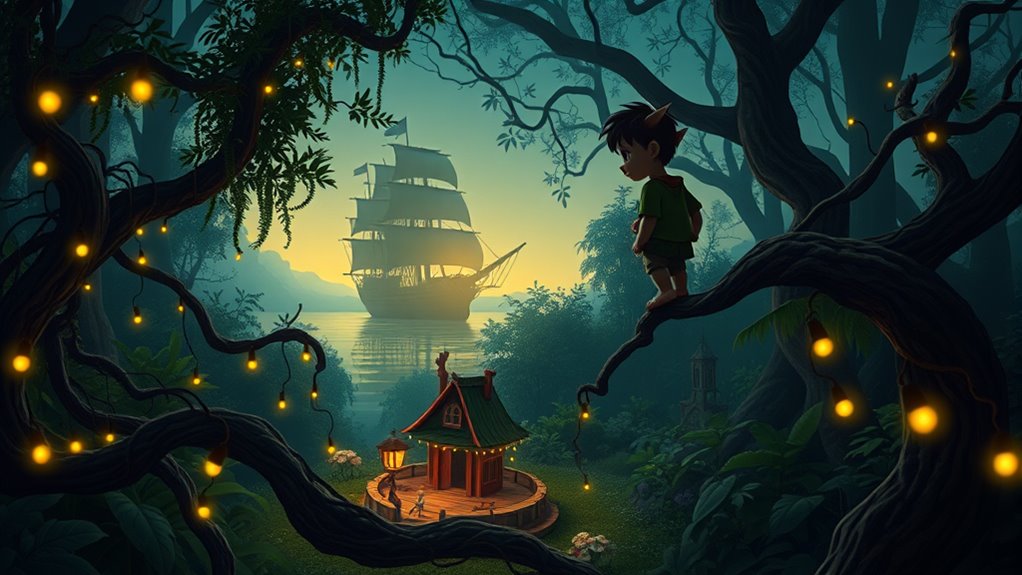
The story of Peter Pan came from J.M. Barrie’s vivid imagination. He created a world where childhood nostalgia and the desire for eternal youth collide.
Barrie was inspired by his own childhood memories and the idea of never growing up. He explored this through Peter, who never ages.
He wanted a character that symbolized innocence and freedom associated with childhood. At the same time, he wanted to touch on the desire to escape the constraints of growing up.
Barrie’s fascination with how fleeting childhood is and the wish to hold onto those carefree days fueled the story’s magic.
As a result, Peter Pan became a timeless figure. He embodies the wish to avoid adulthood’s responsibilities and stay forever young.
This origin story mixes a longing for permanence with nostalgia for childhood. It shapes Peter Pan as an enduring symbol of innocence and the quest for immortality that we all carry inside.
Who Are the Main Characters in Peter Pan and What Do They Symbolize?
In Peter Pan, each of the main characters really represents something important about the story’s themes. For example, Peter himself is quite the symbol of eternal youth and innocence. He’s forever young and adventurous, showing how children see the world with wonder and curiosity.
Then there’s Wendy, who stands for nurturing hope and maturity. She’s caring and responsible, kind of like the voice of reason, but also symbolizes the innocence of childhood combined with growing up.
And let’s not forget Captain Hook. He’s a pretty clear symbol of fear and the corrupting desire for power. He’s a villain who shows what can happen when someone is overwhelmed by greed and a lust for control, contrasting sharply with Peter’s free-spirited nature.
Peter Pan: The Eternal Boy
Many characters in Peter Pan embody timeless qualities that symbolize different aspects of childhood and innocence. Peter himself represents the spirit of adventure and exploration, always looking for new fantasy worlds where imagination rules.
His eternal youth captures the idea of carefree exploration and the desire to stay forever young. As “The Eternal Boy,” Peter is fearless, playful, and unburdened by grown-up worries, symbolizing the ideal of perpetual wonder.
His refusal to grow up reflects a longing to preserve innocence and curiosity. The character’s interactions with others highlight themes of freedom and imagination, opening doors to worlds of adventure.
Through Peter, you see how childhood is a place where fantasy and exploration blend, emphasizing the importance of holding onto wonder and a playful spirit throughout life.
Wendy: Nurturing Hope
Wendy serves as a symbol of nurturing hope and emotional grounding in *Peter Pan*. She embodies parental guidance, offering care and stability to the lost boys and Peter himself.
Her nurturing nature reflects childhood nostalgia, reminding readers of simpler, caring moments of innocence. Wendy’s desire to create a family and provide comfort signifies hope amid a world of adventure and danger.
Her stories and comforting presence help others find reassurance and stability, anchoring their dreams in reality. By providing warmth and guidance, Wendy keeps the spirit of hope alive, reminding us of the importance of love and care.
Her character highlights the human need for connection, emphasizing that nurturing hope can sustain us through life’s uncertainties.
Captain Hook: Fear and Power
Captain Hook stands as the embodiment of fear and authority within *Peter Pan*. He represents the darker forces that threaten innocence and hope.
He embodies the dangers of childhood resilience challenged by real-world fears, showing how fantasy escapism can be a refuge from darker realities. As the main antagonist, Hook’s menacing presence reminds us that danger exists even in playful worlds.
But his vulnerability also shows that fear can be confronted. His pursuit of Peter symbolizes the ongoing struggle between order and chaos, good and evil.
Hook’s character underscores that, despite fears and threats, childhood resilience persists. Kids can face adversity through imagination and courage.
His role emphasizes that confronting fears is part of growing up, even in a world full of fantasy escapism.
How Does Neverland Reflect Childhood Innocence?
You know, Neverland is like this magical place where everything just feels possible, right? It really captures that sense of childhood innocence—like, the world is filled with wonder, and everything is fresh and exciting.
And because Neverland stays forever young, it kinda represents this idea that childhood doesn’t have to end. It’s like a safe space where kids can keep that carefree, joyful spirit alive.
Plus, the best part is that away from all the worries of reality, kids can imagine, explore, and dream to their heart’s content—no limits, no fears. It’s all about that pure, unspoiled sense of innocence.
Magical Land of Wonder
What makes Neverland such a mesmerizing and timeless world is its vivid portrayal of childhood innocence and wonder. Here, your dreams become real as you explore a land full of magic, pirates, fairies, and endless adventure.
Neverland embodies the spirit of childhood adventures, where imagination takes the lead and the impossible feels within reach. It’s a place where you can fly, fight pirates, or find secret hideouts without fear or judgment.
This enchanted island awakens your curiosity and joy, inviting you to believe in magic and cherish every moment of innocence. Neverland isn’t just a place; it reflects the limitless wonder of childhood.
It’s a reminder to hold onto that magic, no matter how old you are.
Eternal Youthfulness
The magic of Neverland goes beyond just wonder and adventure; it captures the eternal liveliness of childhood itself. This dreamlike land reflects childhood nostalgia and the desire to keep youthful innocence forever.
You see this in the endless youth of its inhabitants, who never age, symbolizing a longing to hold onto innocence. The playful spirit rules here, reminding you of carefree days of childhood.
Without grown-up responsibilities, the world feels untouched by the burdens of reality. Neverland is a fantasy domain where time seems to stand still, letting you cherish childhood’s pure joy and innocence.
It’s a vivid reminder of the timeless desire to stay young and keep that innocence alive forever.
Freedom From Reality
How does Neverland serve as a sanctuary where childhood innocence can stay untouched by the complexities of adult life? It’s a place where dreams and routines play out vividly. Here, you escape dull responsibilities and step into a world of endless adventure.
Neverland embodies escapism versus responsibility, giving you a break from the strict rules and expectations of adulthood. The island reflects childhood’s desire to hold onto innocence, where imagination takes center stage over reality.
You can fly, fight pirates, and never grow old—things that are impossible outside of this magical land. This free-spirited place preserves the purity and wonder of childhood.
It offers a refuge where simplicity and joy reign, untouched by the burdens of grown-up life.
Why Do We Want to Never Grow Up? The Meaning Behind That Desire
Many people want to stay young forever because it stands for innocence, wonder, and freedom from life’s worries. That wish comes from nostalgia for childhood and longing for unending innocence. As we get older, responsibilities and stress add up, making the idea of eternal youth very tempting.
The desire to stay young reflects a longing for innocence, wonder, and the freedom of childhood.
You might find yourself wishing to hold onto moments of pure joy and curiosity, when imagination felt limitless.
The reasons for this include:
- Wanting an escape from adult responsibilities and real-world problems.
- Wanting to keep the magic of innocence and exploration alive.
- Wanting to hold onto the wonder that makes childhood special.
This desire is really about wishing to go back to a simpler, happier time—free from doubts, fears, and the pressure of growing up. It’s not about fighting aging but about holding onto those genuine, untouched feelings that remind us of childhood’s timeless innocence.
What Role Does Imagination Play in Peter Pan?
Imagination is like the magic that keeps Peter Pan forever young. It’s what makes his world come alive and helps him stay outside the bounds of time. When you think about it, his world is full of enchanting fantasies where anything can happen, and that’s all thanks to imagination. It gives the characters a way to escape what’s real and dive into their dreams.
Through their imagination, the characters find freedom and adventure, and they get to experience a kind of eternal youth. It’s like a secret world that only they can create and explore, and that’s what keeps the magic of Neverland alive.
Imagination Sparks Eternal Youth
Imagination is the essential force that keeps Neverland alive, blurring the line between fantasy and reality. It fuels your dream exploration and keeps childhood nostalgia alive, making eternal youth possible.
With vivid visions, you can:
- Rekindle youthful wonder, keeping it bright no matter your age.
- Embark on adventures that defy logic, opening up endless possibilities.
- Escape the mundane, immersing yourself in a world where anything can happen.
This endless creativity is what allows Peter Pan to stay forever young and free. Your imagination acts as a bridge between what is real and what is dreamed, maintaining the magic of Neverland and the spirit of eternal youth.
In this way, imagination sparks a constant sense of discovery and innocence.
Creating Enchanting Fantasies
Have you ever wondered how Peter Pan creates his magical worlds? His imagination is the secret to making enchanting fantasies come alive. You’re whisked away to places where fairy dust turns dreams into reality, and every corner holds a new adventure.
His fantasy escape isn’t just a place but a domain where anything can happen. To help you get the picture, here’s a quick look:
| Element | Role in Creating Fantasies |
|---|---|
| Fairy Dust | Sparks the magic that brings these worlds to life |
| Neverland | A magical land that bends the rules of reality |
| Imaginary Creatures | Fill the fantasy with wonder and surprise |
| Endless Adventures | Keep the magic alive through movement and exploration |
Imagination fuels these magical worlds, making them lively, vibrant, and unforgettable.
Escape From Reality
Ever wonder how Peter Pan takes you away from the everyday grind? It’s all about the power of imagination and dream symbolism. Through this story, you escape the tension between reality and fantasy, where normal rules no longer apply.
Imagination acts like a doorway, letting your mind drift into a world full of endless adventure. Dream symbolism taps into your subconscious, blending the magical with your inner truths.
This escape keeps that childlike sense of wonder alive, even when adults are dealing with real-world challenges. In Peter Pan, fantasy isn’t just a way out; it’s a vital part of keeping youthful dreams alive.
You’re invited to leave reality behind and embrace the limitless possibilities only your imagination can create. That’s the real magic of Peter Pan—a forever open gateway to wonder.
How Does Growing Up Feel Both Necessary and Heartbreaking?
Growing up is an unavoidable part of life, even though it often feels bittersweet. You might hold onto childhood nostalgia, cherishing the innocence and wonder of those early years. But growing up also means facing reality’s challenges, which can be heartbreaking.
Growing up blends bittersweet nostalgia with the courage to face life’s challenges and embrace new beginnings.
It’s a process that tests your emotional resilience, forcing you to adapt and learn from setbacks. As you mature, you realize that growth brings necessary change, yet it often comes with a sense of loss. Watching childhood fade isn’t easy, but it’s part of becoming stronger and more self-aware.
While the world of Peter Pan symbolizes eternal youth, your experiences reveal that embracing adulthood is essential—even if it feels sad. Growing up may feel like letting go of what once made you happy, but it also opens opportunities to build new dreams and find deeper meaning.
The pain of leaving childhood behind ultimately shapes your strength and perspective.
How Is the Fear of Aging Portrayed in Peter Pan?
In Peter Pan, the fear of aging shows up as a strong force that keeps characters stuck in childhood fantasies. You can see this in how Peter and others cling to being young and avoid facing the reality of getting older. Their desire to stay young reflects a deep fear of losing innocence and simplicity.
This fear is symbolized by nostalgia for childhood, which can be both comforting and limiting. To understand this better:
- Clinging to childhood—characters resist growing up because they fear losing their innocence and joy.
- Avoidance of responsibility—the fear of aging shows up as a rejection of adult duties and complexities.
- Inability to let go—nostalgia keeps characters tied to youthful memories, keeping them from accepting aging or moving forward.
All these elements show how the story explores the delicate balance between loving childhood and facing the unavoidable passage of time.
What Moral Lessons Does Peter Pan Teach About Childhood and Maturity?
Peter Pan teaches that childhood is a precious time filled with imagination and innocence, but it shouldn’t last forever. It highlights parenting challenges in balancing nurturing a child’s wonder while preparing them for maturity.
The story reminds you that childhood nostalgia can cloud the importance of growing up, but clinging to eternal youth might prevent personal growth. As a parent or guardian, you learn that guiding children through life’s stages involves knowing when to encourage playfulness and when to promote responsibility.
Peter’s refusal to mature symbolizes the desire to avoid the complexities of adult life, but it also shows that maturing brings new opportunities for exploration and strength. The moral is that embracing both childhood and maturity is essential—cherishing innocence while understanding that growth is part of life’s natural process.
Ultimately, Peter Pan teaches you to value the innocence of childhood but also to accept the importance of maturity.
Do Different Adaptations Change Peter Pan’s Central Themes?
Different adaptations of *Peter Pan*—from stage productions and animated films to contemporary movies—often highlight or reinterpret its central themes, shaping how audiences perceive the story’s core messages.
While the idea of a lost childhood remains essential, various versions emphasize different aspects of the fairy tale. Some adaptations focus on the desire to escape reality, emphasizing eternal youth and the magic of childhood.
Others delve into the emotional depth of Peter’s refusal to grow up, questioning the sacrifices that come with maturity.
Certain versions highlight the bittersweet nature of childhood’s fleeting innocence, turning the story into a reflection on longing and nostalgia.
Why Does Peter Pan’s Message Still Resonate Today?
The timeless appeal of Peter Pan’s message lies in its universal exploration of childhood’s longing and the fear of growing up. You’re drawn to its message because it taps into childhood nostalgia and reminds you of simpler, carefree days.
At the same time, it captures the challenge parents face—balancing nurturing innocence while preparing kids for reality. This story resonates today because many people still feel the tension between holding onto wonder and facing adult responsibilities.
Peter’s refusal to grow up symbolizes the desire to keep joy, imagination, and freedom alive, even as life becomes more complicated. It speaks to both children and adults navigating change, growth, and loss.
That’s why the story remains relevant: it’s about universal feelings everyone experiences, regardless of age. It reminds you that it’s okay to cherish innocence while confronting life’s realities.
Frequently Asked Questions
How Does the Story Address the Concept of Escapism?
The story addresses escapism by inviting you into fantasy worlds where childhood innocence reigns. It shows how Peter Pan escapes reality’s hardships, embracing eternal youth and adventure.
You’re encouraged to reflect on the allure of never growing up, highlighting our desire to escape responsibilities. Through this, the story investigates how escapism lets you temporarily find joy and wonder.
But it also warns of losing touch with real-life maturity and growth. So, while escapism can bring happiness, it’s important to stay grounded in reality.
What Are the Differences Between the Original Play and Modern Adaptations?
In comparing the original play to modern adaptations, you notice that adaptations often add richer details to fantasy worlds, making them more immersive. They also emphasize moral lessons differently. While the original focuses on innocence and adventure, newer versions might stress themes like bravery or identity.
You’ll see changes that appeal to contemporary audiences, enhancing storytelling while keeping the core fantastical elements and moral insights central to Peter Pan’s timeless charm.
How Does Peter Pan Symbolize the Idealization of Childhood?
Peter Pan symbolizes the idealization of childhood by embodying innocence and endless imagination. You see him as a hero who avoids growing up, capturing the carefree joy and wonder many wish to hold onto.
He reminds you that innocence and imagination are precious, offering an escape from adult responsibilities. It emphasizes how timeless and powerful childhood dreams can shape your view of the world.
In What Ways Does the Story Explore the Fear of Growing Up?
You see, the story explores the fear of growing up by showing the tension between childhood innocence and adult worries.
As you follow Peter Pan, you notice how the characters hold on to childhood’s freedom and magic, resisting the march toward maturity.
The narrative reflects your own fears of losing innocence. It also highlights how grown-ups often struggle with the responsibilities and anxieties that come with growing up.
What Is the Significance of the Neverbird in the Narrative?
The neverbird symbolizes eternal innocence and the endless magic of childhood. It acts as a guardian of Neverland’s spirit, representing hope, freedom, and the delicate balance between childhood and adulthood.
Its narrative significance is huge—it’s a reminder that innocence is precious and fleeting. When you see the neverbird soaring, remember it’s urging you to cherish the wonder in life’s simplest joys before they vanish forever.
Conclusion
If you imagine never growing up and holding onto your childhood dreams, Peter Pan’s story resonates deeply.
Think of a parent who keeps a childhood toy for their own kids, only to realize it’s more about preserving innocence than nostalgia.
That’s the core of Peter Pan’s message: embracing imagination, innocence, and the bittersweet desire to stay young.
It’s a reminder that while growing up is inevitable, keeping a sense of wonder can stay with you forever.
The central theme of the Peter Pan story is about holding onto childhood wonder and the magic of imagination.